🇲🇦 Morocco
28 days · 3,039 km · 14 places
At a glance
- Best time to go
- Feb – Apr
- Often over 40 °C from May
- Fuel
- under €1/l
- About 10.50 MAD during our trip
- Campsite per night
- €1.50 – 15
- 15 to 150 MAD
- Free camping
- easy
- Almost anywhere in the south, a little harder in the north and on the coast
- Tolls up to 3.5 t
- About €35
- North to south once, carry cash
- Internet
- Often 4G
- Unlimited SIM at Tanger Med about €50
Before you go
What we would tell you first.
Pack your Green Card
Insurance is mandatory. The card, by the way, is no longer green.
Allow time at the port
At Tanger Med an X-ray truck scans the vehicle, then sniffer dogs come by. Everyone is friendly, but it isn't quick.
Buy a SIM right at the port
Tanger Med sold inwi unlimited for 500 MAD. IAM is said to have better rural coverage.
Always carry some cash
Toll stations mostly take cards, but not always.
Think about your clothes
Cycling shorts and a crop top aren't forbidden, but they aren't very respectful either.
What surprised us
- Around 90% of the roads are very good asphalt, often better than in Germany.
- We spent about €5 a week on fruit and vegetables from the market.
- We were only stopped once. The officer wanted to welcome us.
What we would do differently
- Drive south along the coast if you can. Flooding ruled that out for us. We took the middle route, so we kept going back and forth between the coast and the desert in the east. Not a big deal, but the coast route would be simpler.
What you need to know about Morocco
🧭 Country Basics
Safety
We felt extremely safe — arguably safer than in many parts of Europe.
Attitude Towards Travellers
People are incredibly friendly and welcoming. The few vendors who are persistent will usually back off after a polite "no thank you". There are occasional beggars, sometimes children — please don't give anything. Handing out money teaches children that tourists are a source of income and discourages them from learning and working.
Noise at Night
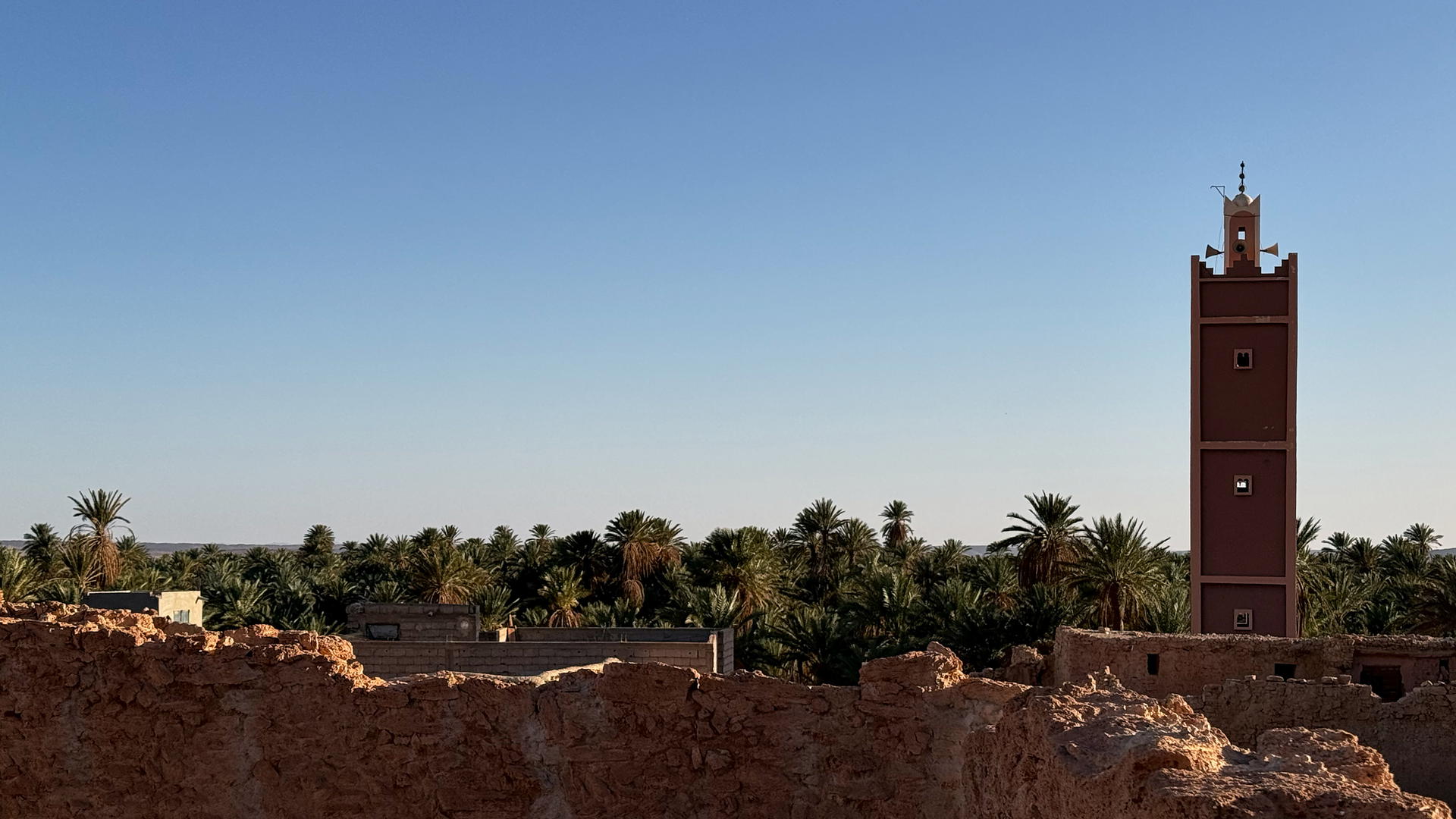
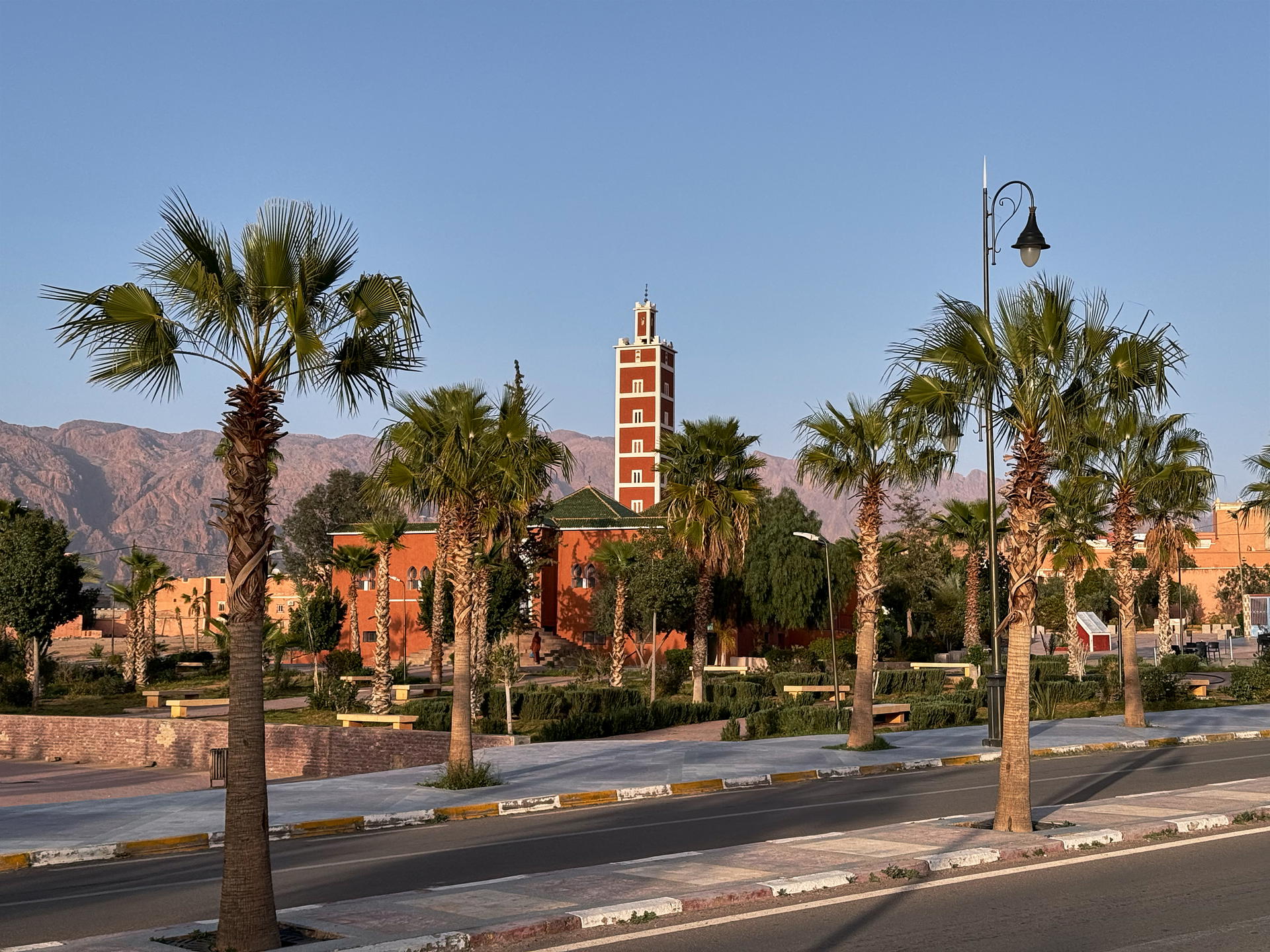
Almost everywhere it was very quiet at night. The call to prayer takes a few days to get used to, but it quickly becomes part of the atmosphere — genuinely beautiful to hear several times a day. The volume also feels considerate.
Highlights
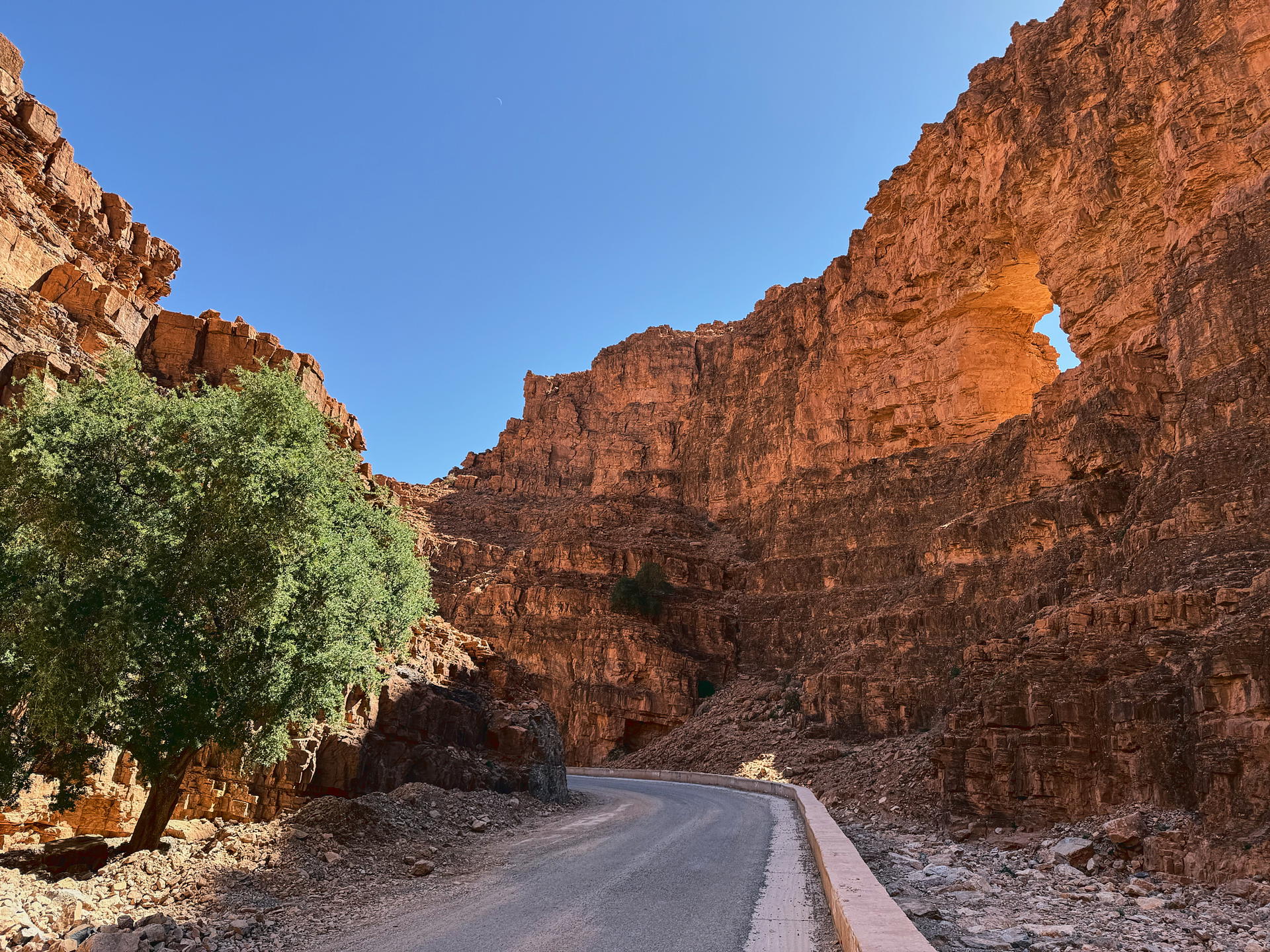
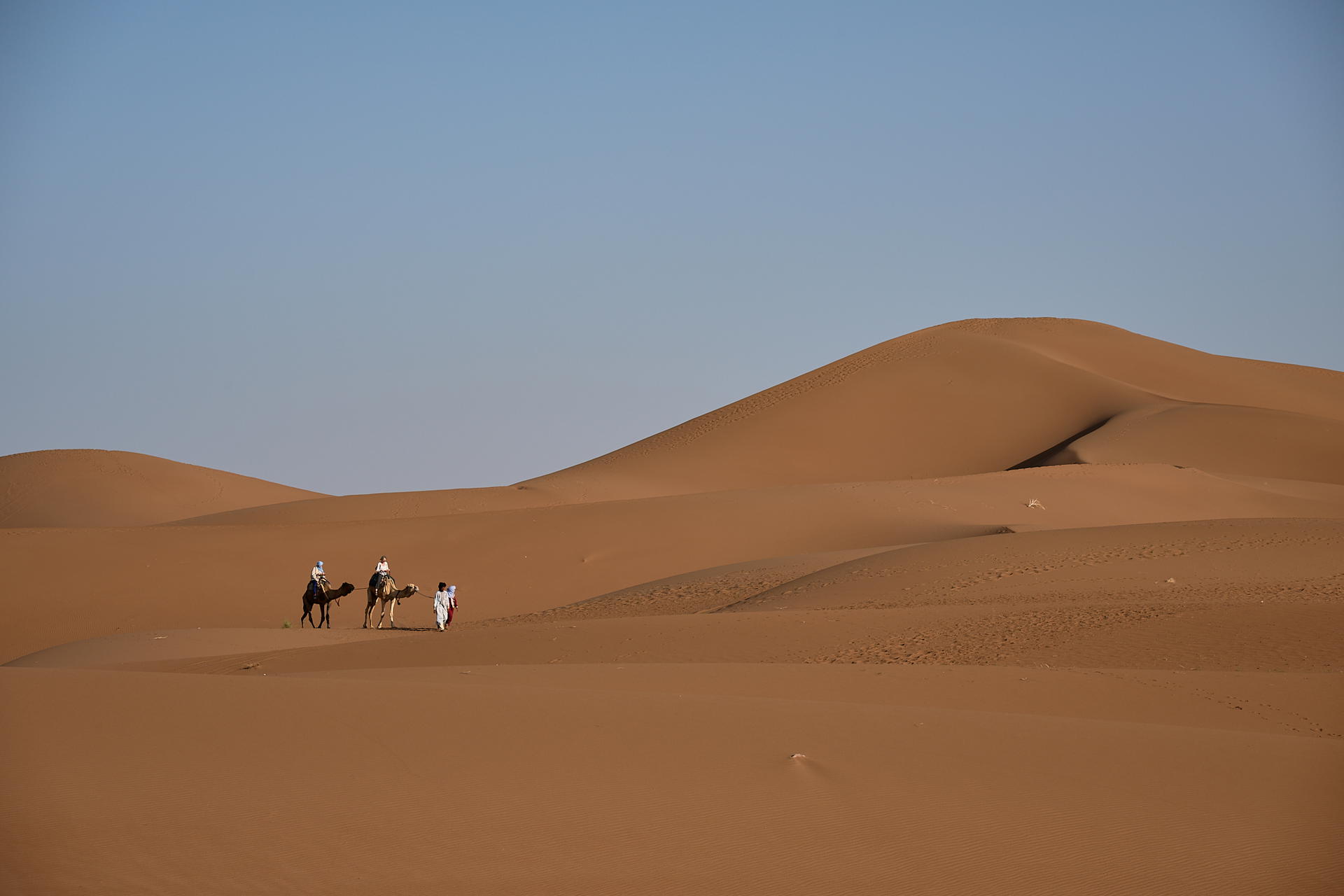
The south. The desert. Above all: go with an open mind.
Language
Arabic > French > English > hands and feet > occasionally German.
🚗 Getting Around
Road Quality & Driving Conditions
Around 90% of roads are excellent tarmac, often in better condition than in Germany. Off-road tracks, smaller villages and remote areas bring potholes, sand tracks and proper piste. Potholes are usually well marked.
Toll Roads
Toll roads exist. Card payment is usually possible at toll booths, but carry cash just in case. A full north-to-south run costs around €35.
Border Crossings & Entry
In our case the crossing was smooth. Expect standard checks on the Spanish side with a brief visual inspection of the vehicle. At Tanger Med, a large mobile X-ray truck scans the car, followed by sniffer dogs and — depending on findings — a more or less detailed search. Everything was friendly and professional. Allow some extra time. You will receive a temporary vehicle import permit issued to the registered owner. There are rumours that only the owner may drive the vehicle — we couldn't confirm this. Important: proof of insurance is required — make sure you have your Green Card (which is no longer actually green).
Police Attitude & Checks
Police checkpoints exist in almost every town. We were only stopped once — the officer simply wanted to welcome us. The general attitude was always correct and friendly. We did hear of isolated incidents of attempted corruption from other travellers, but this never happened to us.
🏕️ Where to Sleep
Free Camping Availability
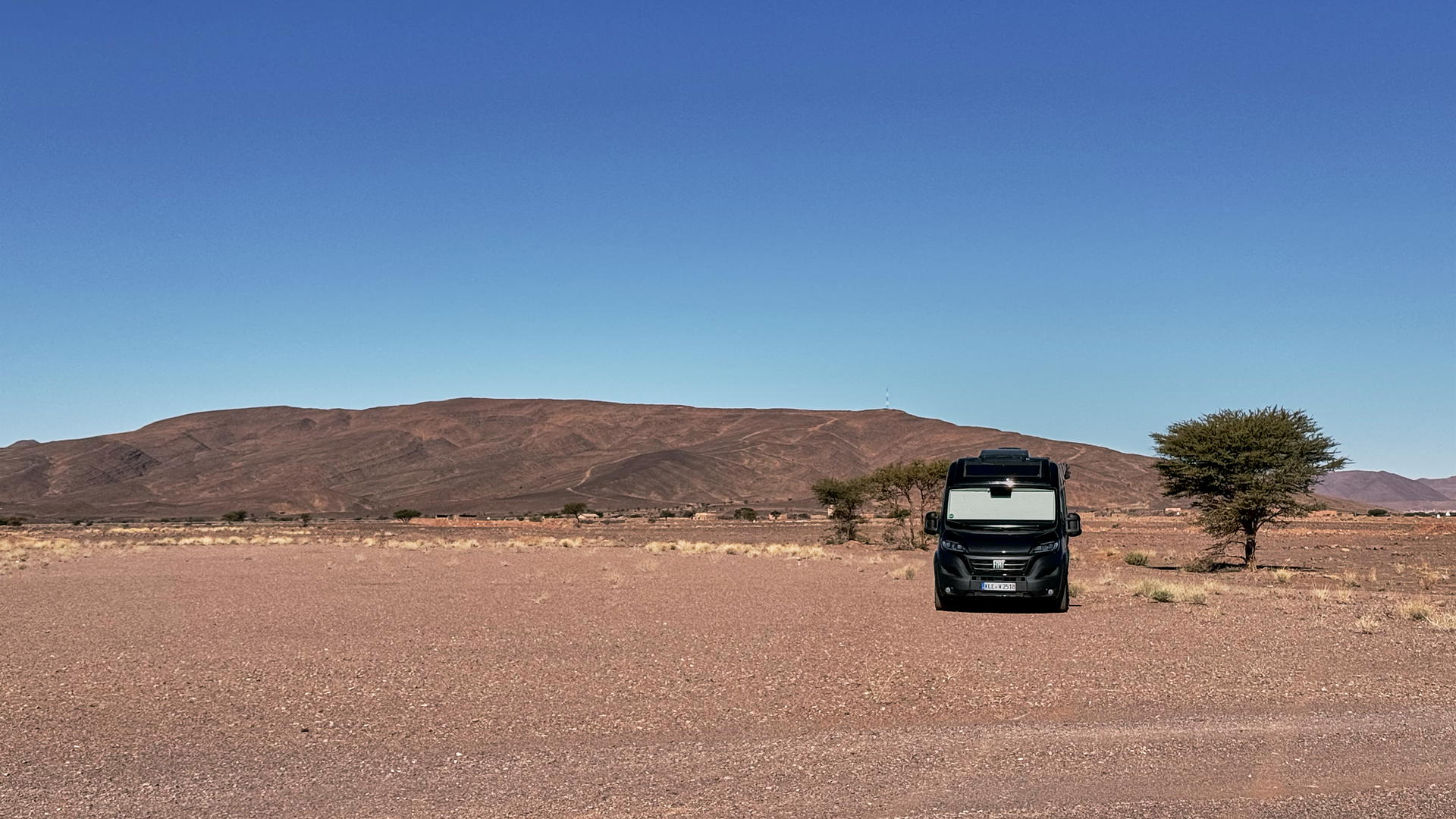
Especially in the south, free camping is easy and possible almost everywhere. Heading north towards the coast it becomes a bit more challenging, but still very much doable.
Paid Campsites
There are an incredible number of beautifully and lovingly designed campsites. Prices are very affordable, ranging from 15 MAD to 150 MAD (roughly €1.50–€15).
Motorhome Infrastructure
Very easy overall. Fresh water is available free of charge in almost every town — mosques often have free public water points. Disposing of grey water and rubbish is also no problem.
💶 Budget & Daily Life
Groceries & Dining Out
Fruit and vegetables from the local market are incredibly cheap and sold by total weight (everything in one bowl — not priced per item). We got by on around €5 per week. Supermarkets are significantly more expensive. Imported and specialty products (e.g. oat milk) can be pricey — around 30 MAD (€3) for the cheapest option. A dinner out with a starter, main course and two drinks came to around 360 MAD (~€36).
Fuel Prices
Diesel was around 10.50 MAD per litre (under €1/l) when we were there. LPG is not available as such — gas cylinders are exchanged instead.
Camping Costs
15 to 150 MAD per night (roughly €1.50–€15).
Laundry
Laundromats, wash services and campsite washing machines are widely available. Pricing is usually per kg — we paid under €10 for a full load.
Mobile Internet Quality
Coverage is generally good, often 4G. IAM (Maroc Telecom) reportedly has better rural coverage. Inwi users have reported speed throttling in the evenings, though we couldn't confirm this ourselves.
SIM Card & Data Plans
The system is easy to navigate once you understand it. For truly unlimited data, inwi is the way to go — buy a SIM in a boutique and add an unlimited monthly plan (not available everywhere). At the port of Tanger Med, inwi unlimited was available for 500 MAD (~€50). When we travelled, Maroc Telecom (IAM) had a 14-day unlimited promotion for 300 MAD. Other options include eSIMs or buying a local SIM and topping up with scratch cards.
Wi-Fi Availability
Almost all campsites offer Wi-Fi and the quality is generally very good.
Water Access
Fresh water is available free of charge in almost every town. Mosques often have public water points, and campsites always have fresh water.
Grey Water & Waste Disposal
Grey water can easily be disposed of at petrol stations, car wash facilities or campsites. Chemical waste is harder to deal with — but we use a dry composting toilet so we can't speak from personal experience. Rubbish bins can be found in most towns, and campsites always have disposal facilities.
Shopping & Supplies
Small local shops carry everything you need day-to-day. On top of that, there are almost-daily fruit and vegetable markets and weekly souks. You can get everything you need without any trouble. Important: wash all fruit and vegetables thoroughly — many travellers recommend soaking them in a bicarbonate of soda solution.
Laundromats
Widely available as laundromats, wash services or campsite machines. Usually priced per kg.
☀️ Climate & Tips
Best Time to Visit
Avoid summer — temperatures can exceed 40°C from May onwards and reportedly reach over 50°C in the south. We found February, March and April to be ideal.
Weather Extremes
Sandstorms are relatively common in the south. In recent years, the north has been affected by severe flooding.
Bug/Mosquito Factor
We encountered absolutely no bugs or mosquitoes during our trip.
Hidden Gems
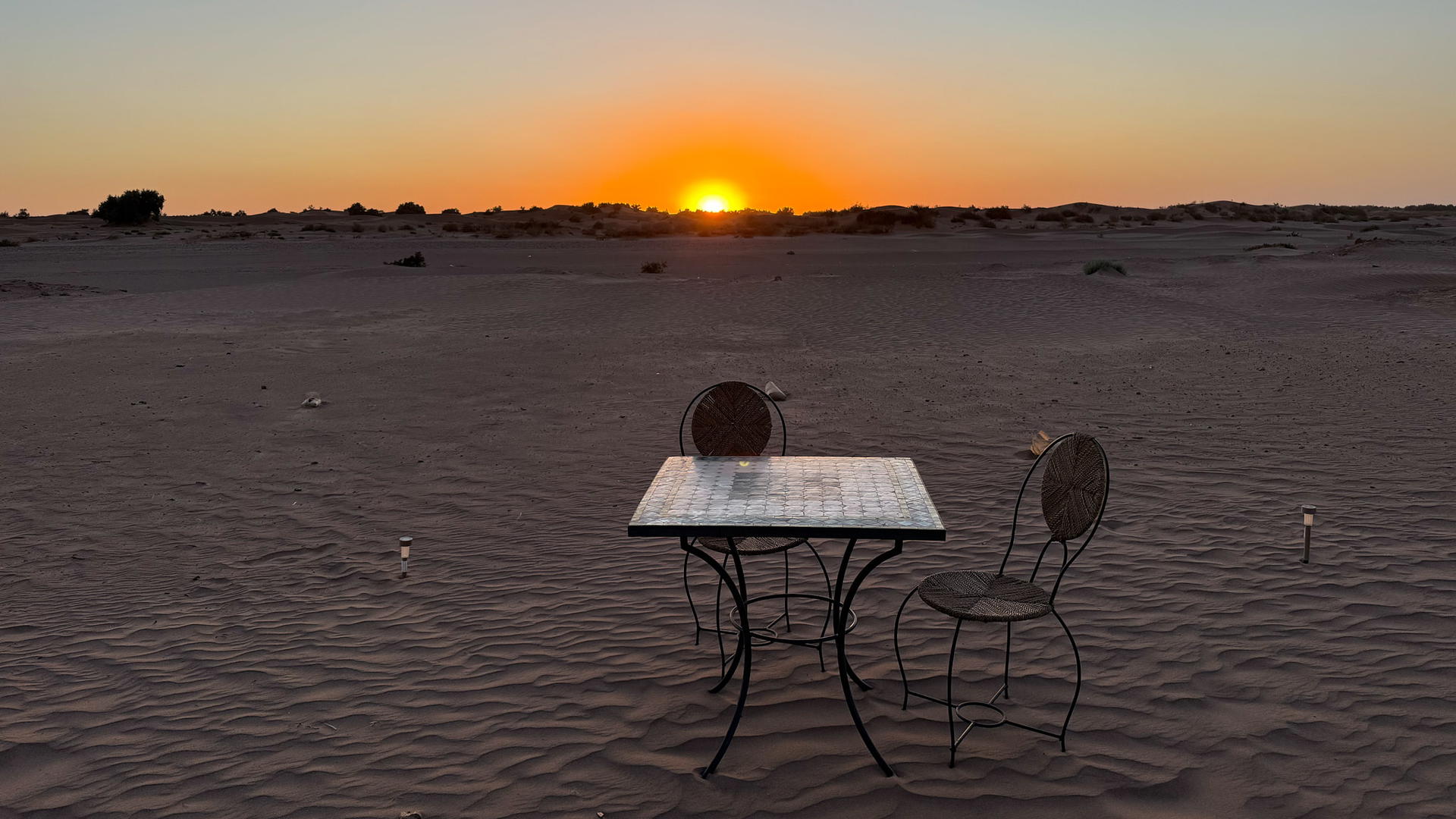
Camp Bivouac Hassi Smara near M'hamid — an outstanding spot deep in the desert.
Useful Apps & Tools
Park4Night for finding overnight spots, Windy for wind and weather forecasting.
Etiquette & Respect
You are in a Muslim country — please respect local customs. Women in particular should be mindful of their clothing depending on the area; tight cycling shorts and a crop top are not forbidden, but they are not respectful. Also: please don't lecture local guides or hosts about their culture and beliefs. We witnessed tourists "educating" a tour guide about polygamy and women's rights. Leave your judgements at home and engage with genuine curiosity instead.
Our route
Trip stats
- 🗓️ Start: 06 February 2026
- 🗓️ End: 07 March 2026
- 🕒 Time spent: 28 days
- 🚐 Distance driven: 3,039 km
- 📍 Overnight locations: 14