
🇱🇻 Kuldīga – The town where fish fly
Welcome to Kuldīga, or Goldingen in German, one of Latvia’s loveliest little towns.
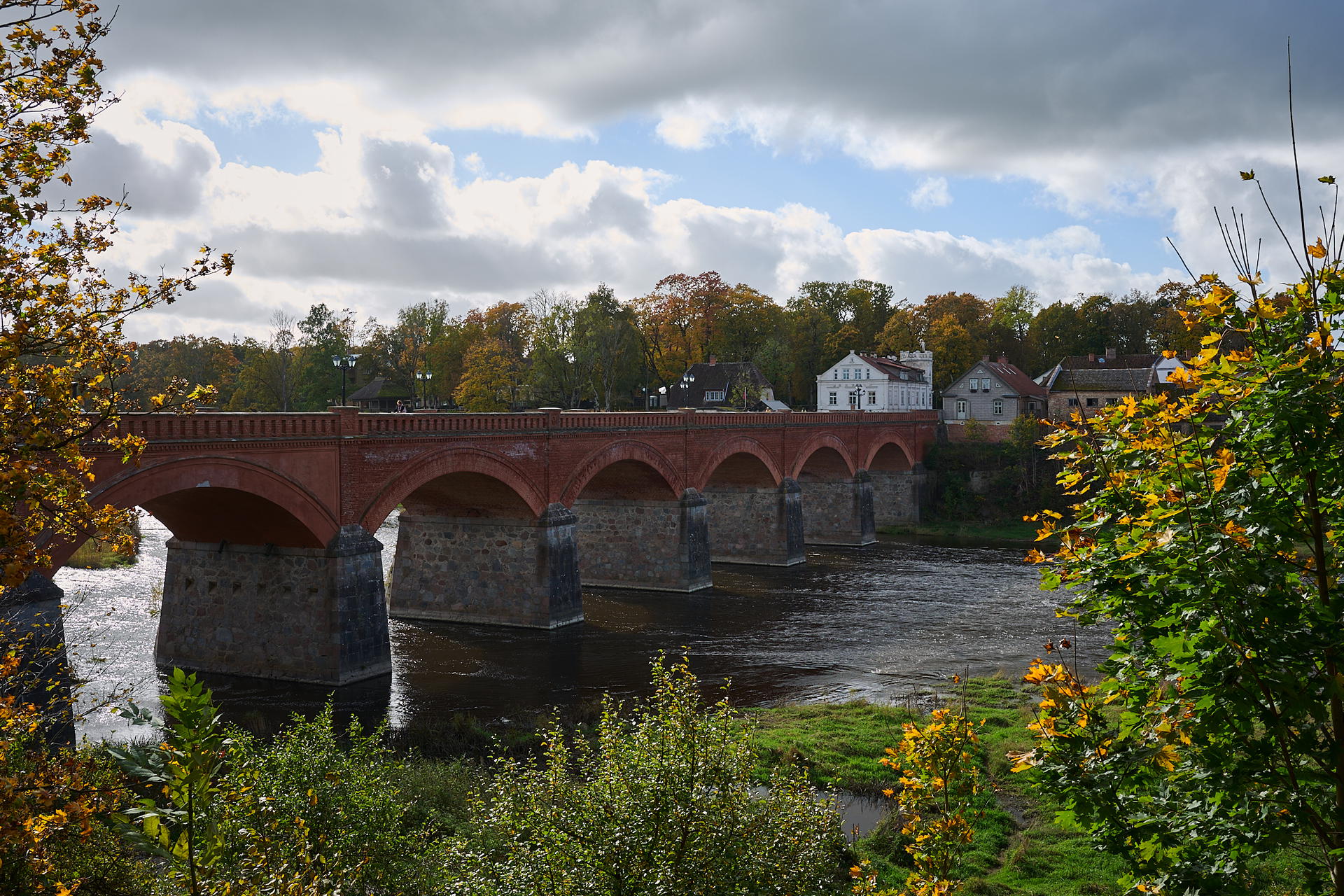
Tucked away in western Latvia, Kuldīga has a beautiful historic old town that’s been a UNESCO World Heritage Site since 2023.
With its narrow cobbled streets, old wooden houses and pretty façades, the town is full of character. Many of the buildings date back to the 17th and 18th centuries, when Kuldīga was an important town in the Duchy of Courland.
The weather was glorious, so we spent our time pottering around the old town. There were surprisingly lots of young people about, and we kept coming across inviting little cafés and restaurants.
They all looked so tempting that Wilma’s kitchen didn’t get a look-in on either evening. We had delicious wood-fired pizza on the first night and burgers on the second.
Traditional Latvian food? Erm, yes … perhaps next time. You’ve got to get your priorities right, haven’t you?
We’d found a fantastic spot to park Wilma right beside the River Venta, which flows for around 346 kilometres through Lithuania and Latvia before reaching the Baltic Sea. The old town was just a short stroll away, and right next to us stood a brand-new viewing tower.
Naturally, we had to climb it.
Our parking spot did have one other little feature, though. Apparently, it was a popular evening hangout for youngsters with souped-up cars who seemed to take great pleasure in revving their engines late at night.
We’d noticed this rather peculiar hobby several times on our travels through the Baltics. What the fascination is, we still haven’t got the faintest idea.
Perhaps there’s a Baltic championship for late-night engine revving that nobody’s told us about.
Thankfully, the impromptu motor show only lasted a few minutes before the boy racers headed off and we could get back to sleep.
Europe’s Widest Waterfall and Flying Fish
The following morning brought more glorious sunshine. During our lunch break, we wandered down to the River Venta to see one of Latvia’s most famous natural attractions: Ventas Rumba.
At around 249 metres across, it’s considered Europe’s widest natural waterfall.
Now, if you’re imagining something on the scale of Niagara Falls, you might be a little underwhelmed. Ventas Rumba is only about two metres high.
What it lacks in height, though, it certainly makes up for in width.
And in autumn, there’s an added attraction.
Flying fish!
Well, not quite.
Every autumn, salmon and sea trout, among other fish, make their way upstream to their spawning grounds. Unfortunately for them, there’s a rather inconvenient waterfall in the way.
The only option? Jump.
And jump.
And jump again.
We stood on the riverbank, absolutely mesmerised, watching fish hurl themselves out of the water, only to land straight back where they’d started with an almighty splash.
Most of the time, it looked like a fairly hopeless exercise.
Maybe a bit more of a run-up?
Or try a different spot?
But no. Apparently, the plan was simply to keep trying until something worked.
You’ve got to admire their determination. Even if their technique could do with a bit of work.
We’d seen a similar spectacle in Canada, although over there you always had the added excitement of wondering whether a bear might suddenly appear to help itself to lunch.
Thankfully, that wasn’t something we had to worry about in Kuldīga.
Kuldīga was only meant to be a quick stopover. Instead, it turned out to be one of the loveliest surprises of our trip through Latvia.