
Going Underground – Our Day in the Wieliczka Salt Mine
Since we were already near Kraków, we couldn't resist visiting one of Poland's most famous attractions: the Wieliczka Salt Mine.
It's not every day you get to wander through a place that's been in operation since the 13th century, is part of the UNESCO World Heritage list, and has enough underground tunnels to make a mole dizzy.
We joined a guided tour led by Marek, a man with a dry and dark sense of humour that made the history lessons fly by. Marek didn't just show us the mine; he brought it to life, mixing fascinating facts with jokes.
He led us down a lot of stairs (thankfully down, not up), deeper and deeper into the earth. It's deep – really deep. The mine goes down about 327 meters and has over 300 km of tunnels. Don't worry – the tours only cover a few kilometers… unless you get lost.
And what did we find? A hidden world made entirely of salt.
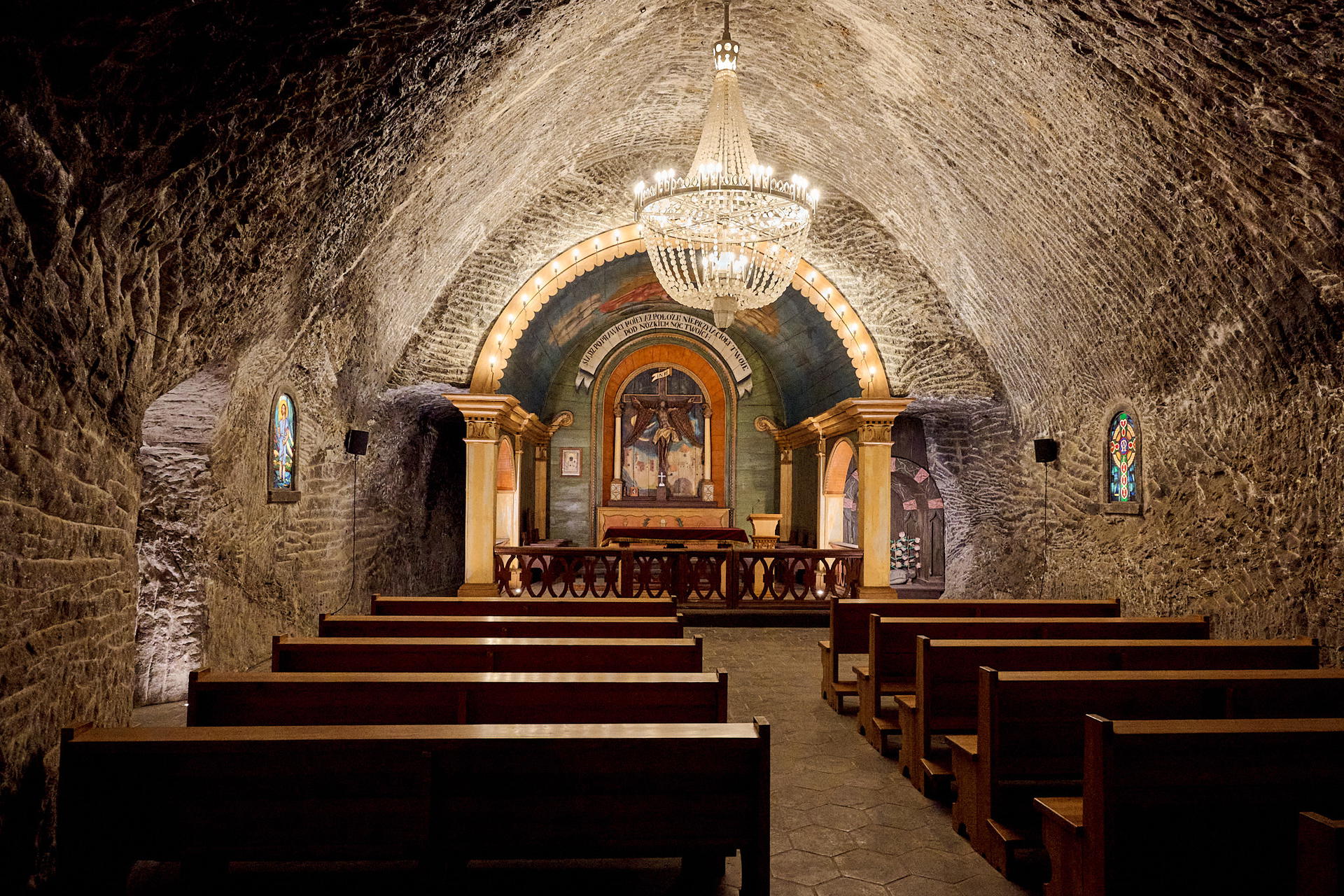
Walls, floors, chandeliers, sculptures – even full-blown chapels (5 in total!) – all carved by miners over hundreds of years. You can also lick the walls… but Marek warned us he wouldn't recommend it, but "it's included in the ticket price!". We took his word for it.
One of the highlights was the Chapel of St. Kinga. This breathtaking underground church has everything made of salt, including the altar, floor, statues and decorative reliefs. Further down, we came across an underground lake with water so salty that you could almost walk on it. For safety reasons, however, we left that to the imagination.
We also learned that Wieliczka is one of the world's oldest salt mines still in operation, and together with the Bochnia Salt Mine and the Saltworks Castle, it forms the Royal Salt Mines of Wieliczka and Bochnia. Over the centuries, it has been visited by kings and queens (including Sisi), scientists (such as Copernicus and Humboldt) and famous people (including Goethe and Pope John Paul II) and now, two curious van lifers too. 😁